Principles of Open Mentorships
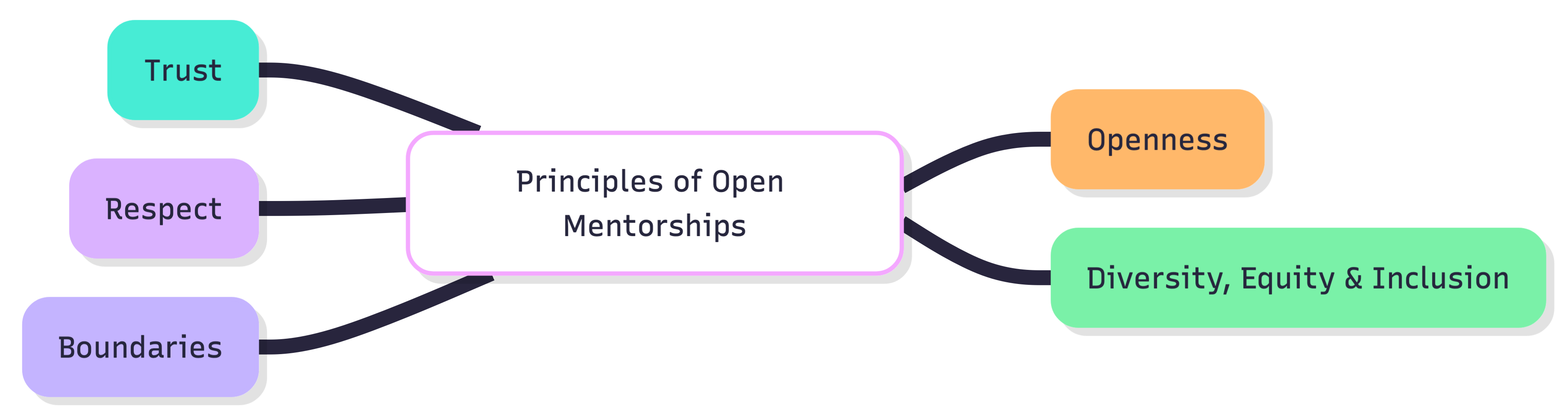
Trust
Open mentorships require a mentee to show their uncertainty and be vulnerable. That only happens when there's enough trust that doing so feels safe. Trust is built slowly, through consistency. A mentor who shows up when they say they will, who responds when they say they will, and who keeps what's shared in confidence is building trust whether they think about it that way or not. When trust breaks down in a mentorship relationship, the learning stops.
Respect
Respect in open mentorships mean taking the other person's time, effort, and perspective seriously. It means giving feedback that's honest without being contemptuous. It means recognizing that the mentee is a full person with a life outside the program.
Open mentorships are built with mutual respect: respect to each person's individual contexts, cultural backgrounds and expertise.
Boundaries
Boundaries protect the mentorship relationship from collapsing under its own weight. A mentor who is available at all hours will burn out. A mentee who is expected to be always responsive will too. Boundaries make sustained commitment possible. They also protect against the subtle power imbalances that mentorship relationships carry. A mentor who understands the limits of their role doesn't try to make decisions for their mentee. They help their mentee make better decisions for themselves.
Openness
Open mentorships must have a commitment to openness: if there are any resulting artifacts (e.g. strategic documents, code, designs), they should be accessible and available to all. It means transparency about how decisions get made, honesty about what a program can and can't offer, and a genuine willingness to learn from the people you're trying to serve. An open mentorship culture is one where a mentee can say "this isn't working" and be heard rather than managed.
Diversity, Equity & Inclusion
Open mentorships should be offered as a bridge to opportunity for all, recognizing and addressing each and every person's particular challenges and struggles. Achieving diversity, equity and inclusion requires active design — building for the person who will find participation hardest, not the person who will find it easiest. It also means recognizing that this work is never finished.