Things to Consider Before Looking for an Open Mentorship
Welcome to the mentee learning path! If you're here, you want to contribute to open projects or create and maintain your own, but there's a significant gap between where you currently are and where you want to be. Open mentorships are a great opportunity to help you cross that bridge, but not all mentoring relationships may be a good match for you.
Is an open mentorship a good option for you?
Note
You don't need to be a complete novice in a field or a junior professional to benefit from an open mentorship experiences. There are open mentorship opportunities for all experience levels!
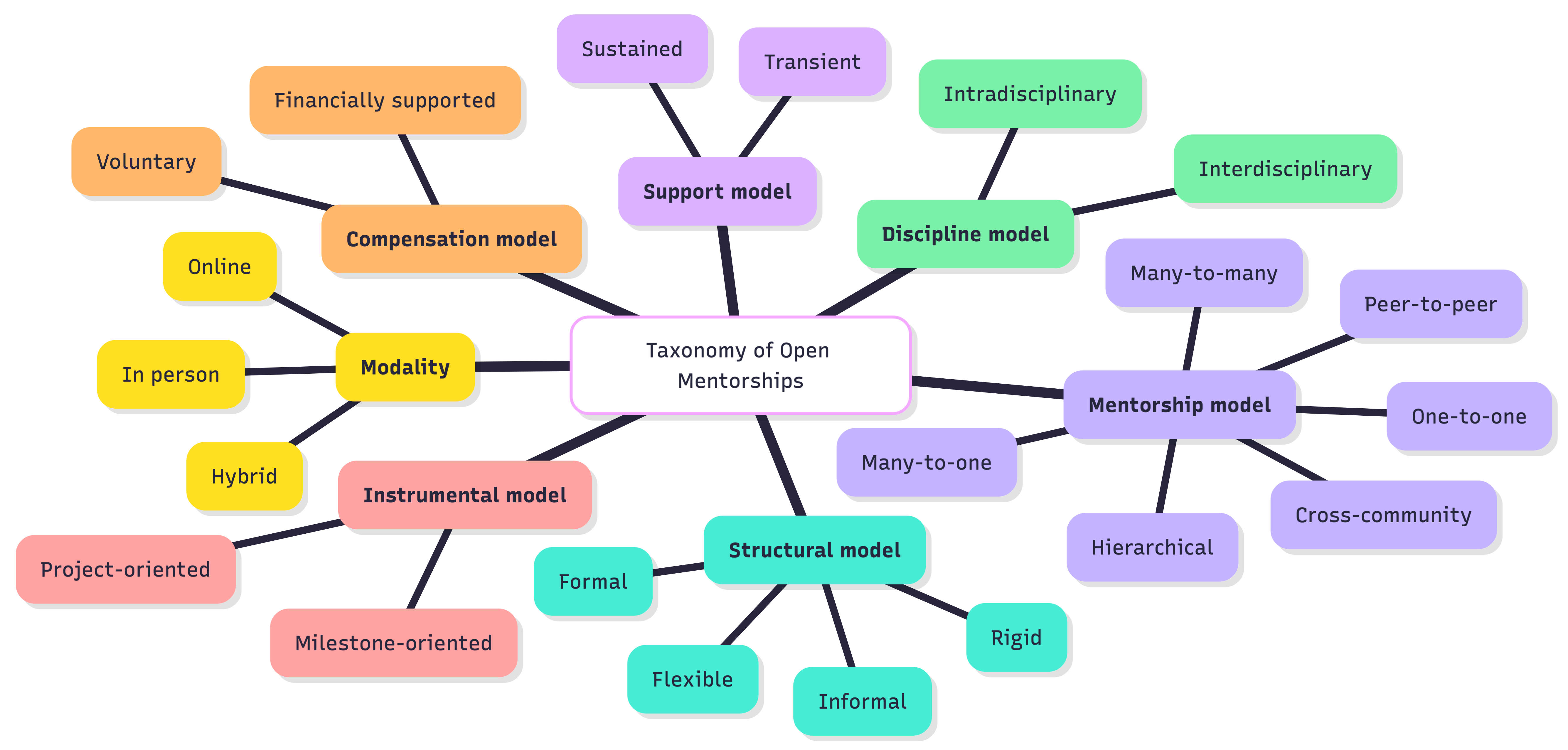
As you may recall from the chapter Taxonomy of Open Mentorships, we observe several different models and modalities in open mentorships:
In order to discover what type of open mentorship you're looking for — or if an open mentorship is the best option for you —, we recommend you to go through a self-reflection process and evaluate your ambitions, abilities and availability by answering the following questions:
- What's your current goal?
- What do you need to do or know to achieve it?
- What do you know? What are your strengths?
- What don't your know? What are you weaknesses?
- What options do you have to learn what you don't know?
- What are your current time commitments?
- How much time can you fully commit to achieve your current goal?
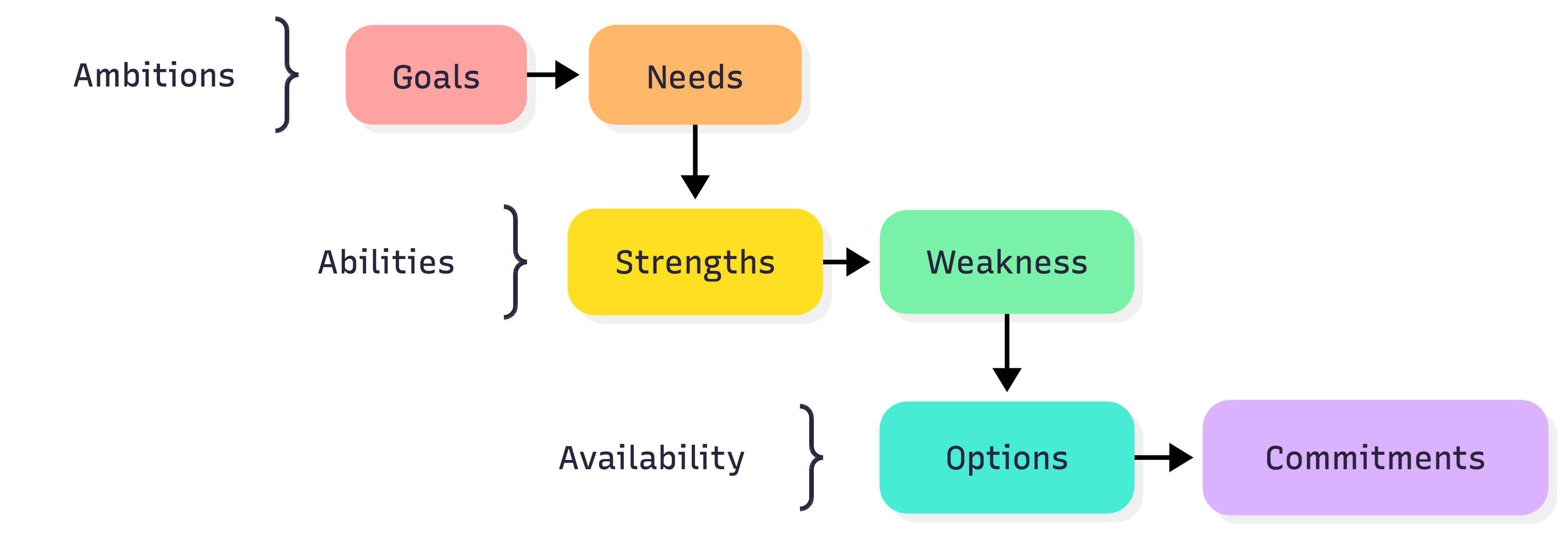
Our AAA Self-Orientation Framework
If an assisted learning opportunity is compatible with your goals, needs, abilities and commitments, then an open mentorship may be a great option for you!
What's the best type of open mentorship for you?
To narrow down what type of open mentorship to look for to achieve your goals, ask yourself:
-
Are you looking for a formal opportunity — that is, something that you may be able to list as a professional or educational experience — or are you be happy to consider an informal mentoring relationship?
-
Do you need a rigid mentorship structure to thrive (i.e. with a pre-determined timeline following a specific script) or would you flourish with a more flexible mentoring relationship (i.e. you and a mentor can figure out how to structure it)?
-
Would you like or need to receive some form of financial support while working with a mentor, or is this something you can do voluntarily?
-
Do you need support from a mentor during a specific transitional stage, or would you like your mentoring relationship to be sustained through multiple stages of your life or career?
-
Do you need support across multiple disciplines or skills (e.g. community management and versioning systems) or with just one discipline or skill (e.g. programming)?
- Would you like to work with just one mentor or multiple mentors? Would you like to work with a mentor who's more experienced than you (i.e. hierarchical mentoring)? Are you open to working with people in the same skill level as you (i.e. peer-to-peer mentoring)? Would you like to collaborate with a different community or project (i.e. cross-community mentoring)?
- Would you like to work on a specific project during your mentorship, or do you prefer structuring your mentorship around reaching specific milestones?
- Would you like the activities to take place in-person, online or a mix of both?
Remember that (1) you'll have the chance to experiment with different formats at different stages of life and career (2) the best type of open mentorship for you at a given moment may vary due to life and career circumstances.
Checklist: Before looking for an open mentorship opportunity
- Define your current goal
- Create an action plan
- List your strengths and weaknesses
- List your options
- List your time commitments
- Establish your level of commitment
- Evaluate whether you want and can become a mentee
- Evaluate which mentorship style fits you best
In the next chapter
- Learn some of the more common terms used by open mentorship opportunities
- Understand the differences and advantages of formal and informal open mentorship relationships
- Discover what type of open mentorship opportunity is best for you!