Applying to Open Mentorship Opportunities (or Building Your Own Experience)
Understanding the role of applications
All formal open mentorship programs require you to submit an application at different stages; some may require you to submit several different applications as you make progress in their application process. This is a common practice because programs may receive hundreds or thousands of applications per season, and they need to ensure that all admitted applicants abide to program policies and rules. Applications can help program organizers and/or mentors:
- Determine your location1
- Measure your level of experience, expertise and commitment
- Filter out uninterested or ineligible applicants
Application stages
Programs are typically organized by different stages for interactions mentors, mentees and collectives:
- A call for applicants announces deadlines and eligibility criteria for mentees
- An application period is when programs accept application submissions
- If the program is centered around external projects, there may be a contribution period to allow mentees to work on tasks that will help them understand the project's standards, practices and culture
Programs such as Outreachy may require you to submit two different applications: an initial application and a final application. Initial applications are used to determine an applicant's eligibility to the program. Final applications are specific to projects of mentoring communities and register all contributios you've made alongside details about your project and community-specific questions. Other programs, such as Google Summer of Code, may choose to merge both periods into one.
Creating your application
Tip
It may take one or several attempts to be selected to an open mentorship program. Don't get discouraged if you're not accepted in your first try! 70-90% of Outreachy mentees are returning applicants.
Pay attention to the seasonality of your desired open mentorship program. Does it happen at the same time every year? Do different seasons have different requirements? You can subscribe to newsletters or follow them on social media in order to be notified about their application period as soon as it is announced.
Programs may require you to create an account on their system or submit a response to a form to apply. Application questions may be available on their mentee documentation or accessible through forms. Either way, we recommend that you write them on an external, possibly offline document. Applications may include a mix of general and project or program-specific questions. As a general guideline, if a program asks you about your personal experiences, you should:
- Answer all questions truthfully
- Include two or three descriptive examples in your essays
- Highlight only your relevant experience or background
Look for documentation or other types of media (e.g. videos, podcasts, social media posts) about what programs consider to be a high quality application. Past applicants or alumni may also share useful tips on blogs, videos or social media posts.
Applications and AI
Programs may have different approaches as to whether they allow you to use artificial intelligence tools such as LLMs. Some programs may allow or expect you to use them in all stages; some programs may ask you to not use them in specific stages or in none. We recommend that you look for documentation or mentions to an "AI policy" to check what's the case and to respect it. Some of the reasons why programs may not allow AI usage include:
- Wanting to hear an applicant's authentic voice through their submissions
- Evaluating whether an applicant's interest is genuine
- AI fatigue
If a program or a community allows you to use AI tools, we recommend that you employ all four competencies of the Framework for AI Fluency:
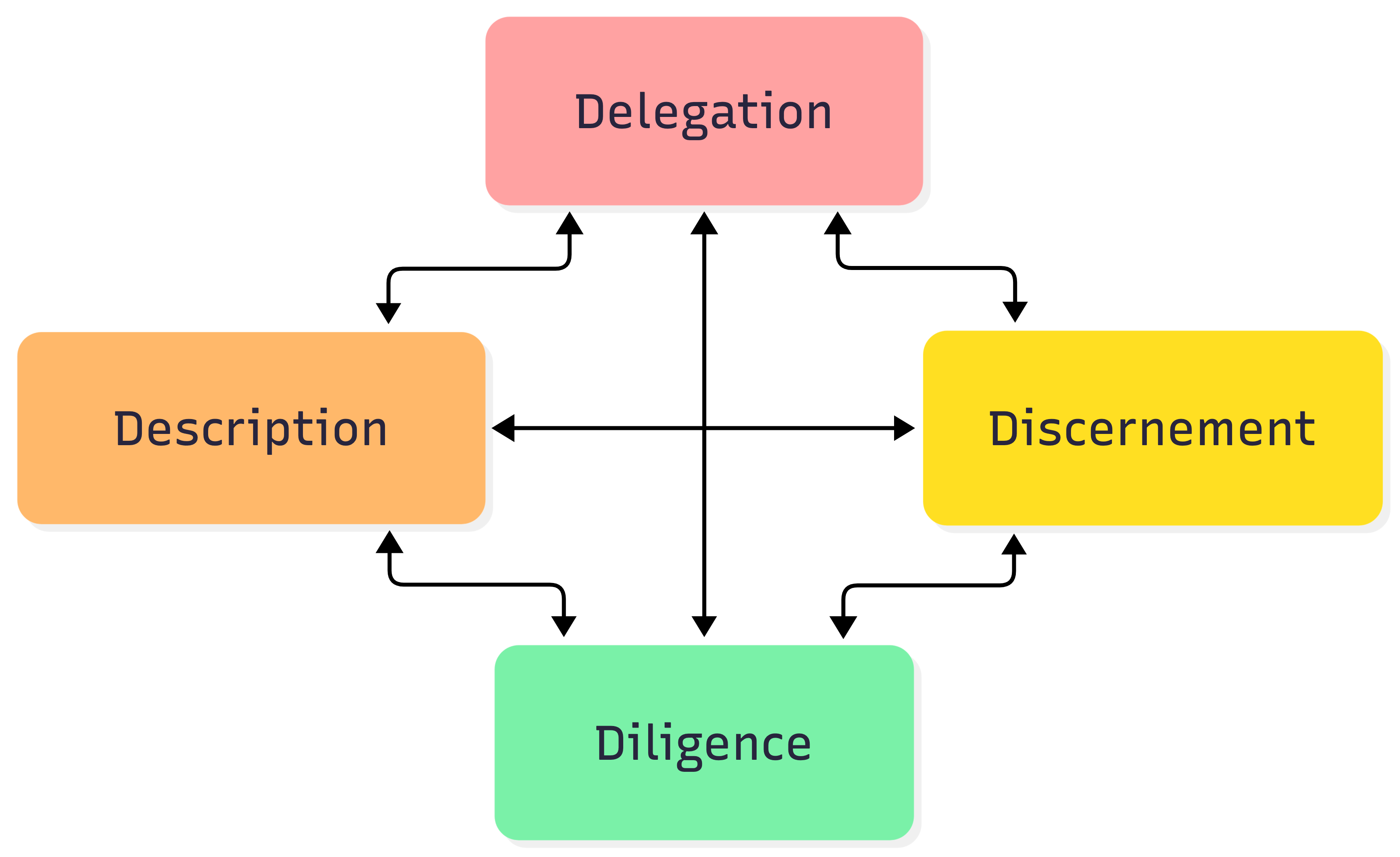
Core competencies to develop and employ when interacting with AI tools proposed by the Framework for AI Fluency2
- Delegation: The ability to identify when and how to use AI tools for a task or project. To achieve it, you need to develop problem awareness (i.e. a deep understanding of the problem at hand), platform awareness (i.e. understand what available AI tools are capable of doing) and decide which tasks will be delegated to you or to AI systems.
- Description: The ability to interface with AI tools. You need to develop a product description (i.e. define and describe the desired outputs), a process description (i.e. define and describe your desired approach) and performance description (i.e. what AI systems should emulate — a supporting colleague, a challenging professor?).
- Discernment: The ability to discern the outputs produced by AI tools. You do so through product discernment (i.e. evaluating the quality of outputs — is it factual, appropriate, coherent, meets all requirements and standards?), process discernment (i.e. evaluating the approach used to produce that output — are there any logical inconsitencies, inappropriate steps?). Description and discernment are two sides of the same coin.
- Diligence: The ability to take responsibility for the produced outputs, understand the implications of possible errors and how data is being used and treated by interfacing services. That includes creation diligence (i.e. understand and choose which AI tools to use and how to use them), transparency diligence (i.e. being open and transparent with everyone about AI usage — for example, "Code reviewed for conformance with coding standards by Claude 3.5") and deployment diligence (i.e. you're responsible for outputs you use or share).
Note that AI tools aren't a replacement for subject matter expertise — in fact, successfully employing all core competencies listed above relies on your own formed expertise.
Making contributions
If an open mentorship opportunity of your choice includes a contribution period, you will be expected to browse through a list of projects and introductory tasks. This is the expected contribution process:
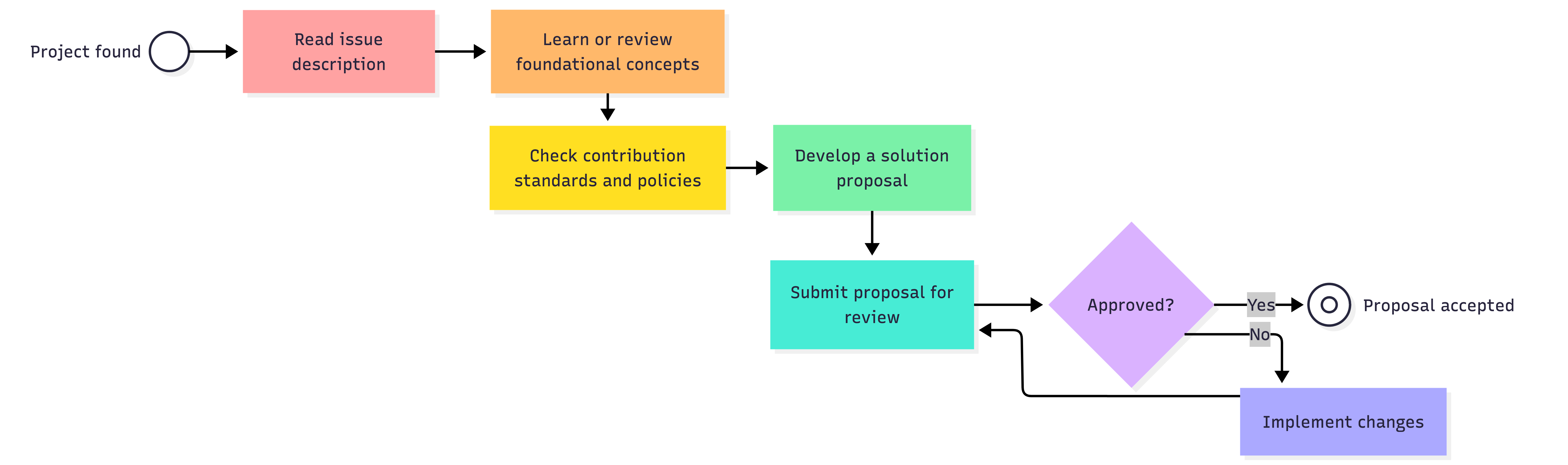
Here are a couple of tips to navigate this stage:
- Browse communities and projects related to personal interests or skills. For example, if you're a Biology student, take a look at communities and projects related to open science practices. You don't need to restrict your choices to your current field — several Google Summer of Code and Outreachy alumni worked on projects in completely different fields —, but this familiarity may help you navigate complex project contexts and tasks.
- Learn the project or community contribution policies and processes. Each project or community has its own set of policies and processes for submitting a contribution. If you're interested in a coding project, you will learn that some communities will require you to follow specific coding standards, others will ask you to run and share the outputs of local tests or follow checklists to submit a pull or merge request. Design projects may ask you to follow standards from a design system or use toolkits for platforms like Penpot.
- Check their AI policies. Some of them may allow you to use AI tools, some of they don't. If you're curious about what an AI policy may look like, Melissa Weber Mendonça has compiled several examples of AI contribution policies.
- Look for communication channels. Some communities or projects may set up dedicated Slack or Zulip channels for open mentorship program contributors.
- Ask for help from and help your peers. Your peers should be seen as learning partners, not competitors. If you see someone struggling with something you know, step in and help them. If you're struggling with something, don't be afraid to ask for help from your peers. Mentors and community contributors may be overwhelmed with the amount of applicants they receive, so we recommend that you also seek guidance from other sources.
Checklist: Applying to an open mentorship opportunity
- Read the program schedule
- Read the program eligibility rules
- Find documentation on applicant questions or read the form in full before submitting it
- Find documentation or personal reports about high quality applications
- Make a list of criteria you think makes an application successful
- Create an external, offline document for your application
- Write your application answers
- Check your application against the criteria for high quality applications
- [If contributions are expected] Make 2-3 meaningful contributions
- Ask a trusted person to review your application
- [If you used AI tools] Write a diligence statement
- Submit your application
Building your own open mentorship experience
If an informal open mentorship is a better fit for you, you may need to build your own mentorship experience alongside your mentor. Here are a couple of tips to help you with that:
Vetting your mentor
- Look for experienced mentors and/or mentors in trusted communities. Ask them questions such as:
- What's your preferred communication channel?
- How often do you check on to your mentees?
- What's your mentorship style?
- How often do you meet with your mentees?
- How and how often do you provide feedback to your mentees?
- How was your last mentoring experience? Can I meet your last mentee?
- Look for possible incompatibilities. For example, if a mentor prefers to check on mentees once every two weeks but you need a mentor to check on you more often, your work styles are incompatible and your mentorship relationship may not be sustainable.
Managing expectations
- Tell your potential mentor about your current goals and why you want to be mentored by them. Talk about your motivations and aspirations and where you see yourself in the future. This will help both of you establish the best course of action for your mentoring experience.
- Determine whether you need a transient or sustained mentoring relationship. If you need to be mentored for a short time, work with your potential mentor to estimate for how long they should guide or supervise you. If you're looking for a long-term mentoring relationship, tell them! And work together to establish a cadence of meetings and guiding sessions.
Checklist: Building your own experience
- Look for people who can vouch for your potential mentor
- Ask about communication preferrences
- Ask about mentorship style
- Ask about feedback style and frequency
- Ask about meeting frequency
- Talk to a past or current mentee
In the next chapter
- Learn about the expected phases of your open mentorship, and prepare for each phase
-
Programs such as Google Summer of Code calculate your stipend considering your country of residence. On the other hand, if you're a student, programs like Outreachy use your location to determine the best season for you to apply. Programs providing financial support may check if you're living in a country under sanctions or other restrictions. ↩
-
Adapted from Rick Dakan and Joseph Feller. "Framework for AI Fluency (Practical Summary Document)," Version 1.1, Ringling.edu/ai/, 2025. https://ringling.libguides.com/ai/framework Retrieved on May 25, 2026. ↩